




These are a few of the organizations we've served globally.








MEMS Mirrors & MEMS Modulators
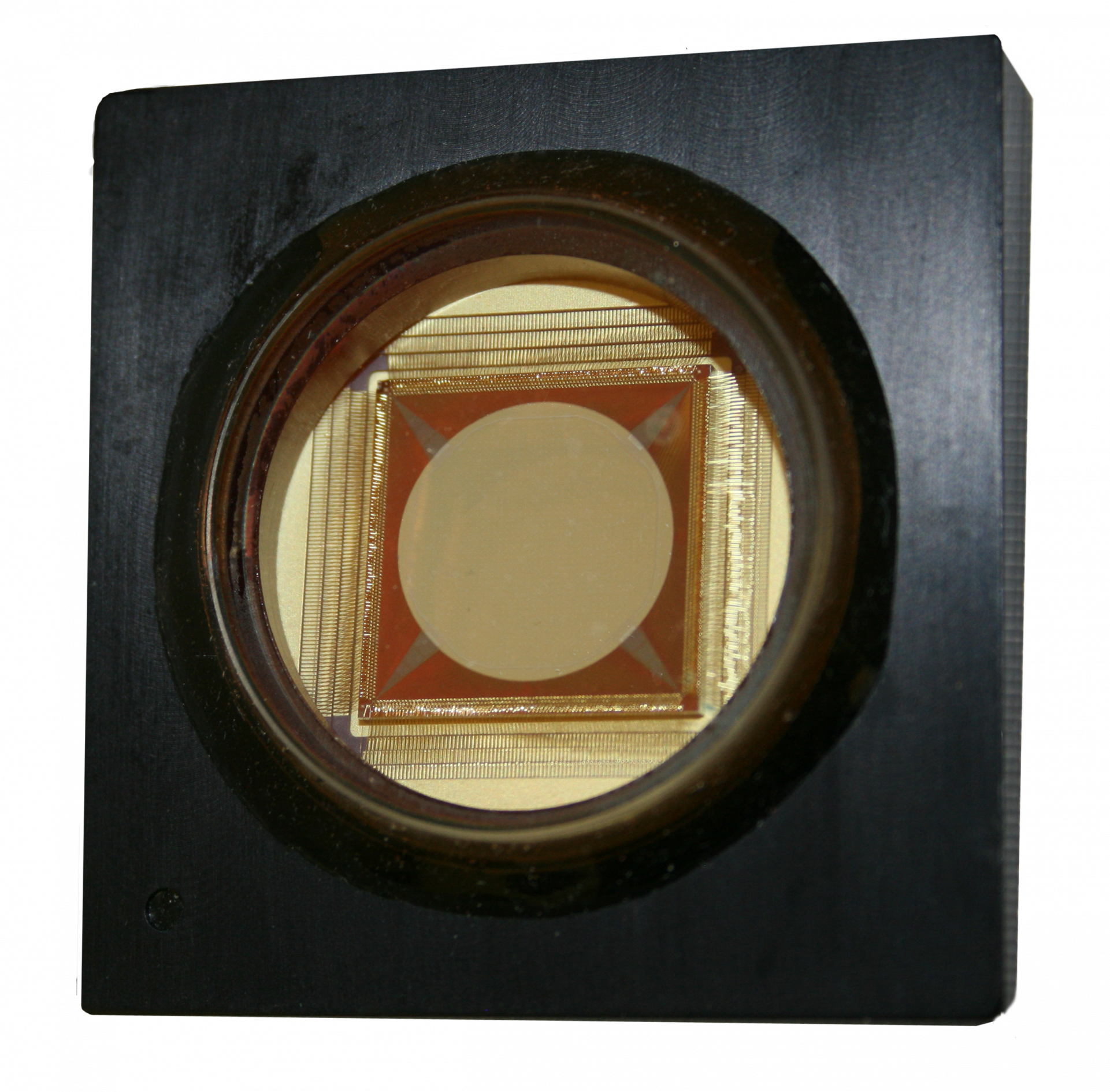
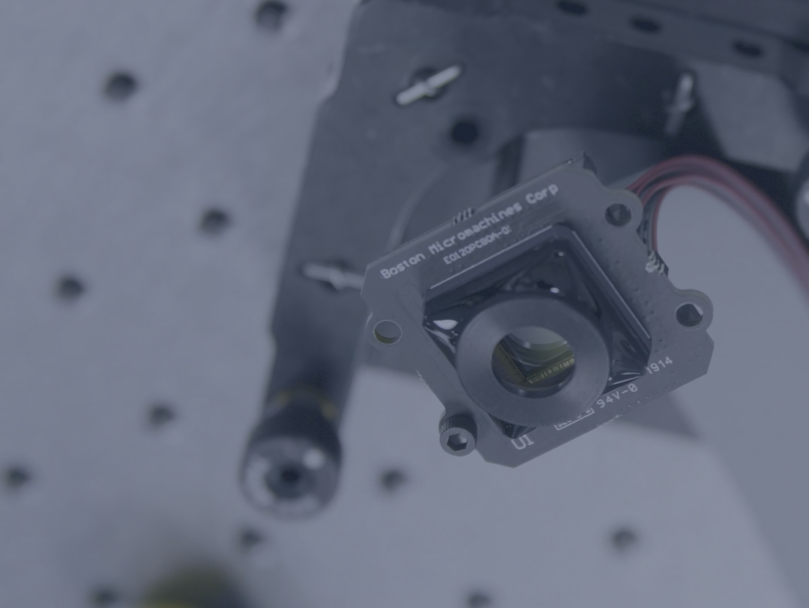
Boston Micromachines has pioneered MEMS (micro-electro-mechanical systems) deformable mirrors for advanced optical control. These miniature-precision light-shapers empower the world's top researchers to make breakthroughs in astronomy, microscopy, laser research, laser communication, and retinal imaging. Leading the industry in MEMS mirror development and expanding into full high-resolution imaging systems, Boston Micromachines is committed to driving discovery in photonics applications.
Multiple Products for various light-shaping applications
By developing photonics products such as MEMS Deformable Mirrors and MEMS Grating Modulators, Boston Micromachines has enabled researchers to push the limits of what is possible. This is due to the fact that our optical solutions provide more control so professionals can manipulate the wavefront.
In extreme adaptive optics in astronomy, instruments have been designed to detect and characterize planets around far-away stars. In adaptive optics microscopy, new modalities have been pioneered to resolve details with finer precision than ever before. In laser communication applications, data can be transmitted farther than ever before with greater throughput thanks to deformable mirrors.

Deformable
Mirrors
For microscopes, telescopes, laser beam control and defense applications. Deformable mirrors are used for a wide array of applications in various industries. Whether you are sharpening your image or optimizing data throughput, deformable mirrors can be used to improve your optical application.
Learn about deformable mirrors>
Adaptive Optics
Software
For implementing deformable mirror applications without the need for low-level programming. Take advantage of our experience with various correction schemes through the use of our code for adaptive optics. Whether you are trying to quickly set up your optics or testing out an algorithm, Boston Micromachines' AO SDK can help the experienced programmer figure out what is best for their application. Still not sure? We have engineers on staff who have built their own AO systems and would be happy to discuss what is best for your application.
Learn about adaptive optics >
MEMS Grating
Modulator Products
For laser communication and intra/extra-cavity beam shaping. Intensity control options exist in many forms. Use the Boston Micromachines MEMS Grating Modulator as a replacement for a pockels cell or to better tune the intensity of your beam as a substitute for an acousto-optic or electro-optic modualator. Solutions are available ranging from fully integrated systems to basic components that can be customized for various wavelengths, contrast levels and response times.
Learn about modulators >Challenge your
assumptions around
what’s possible with deformable mirror technology
Our MEMS Grating Modulators allow you to extinguish light as needed. This represents a new generation of intensity control as it allows the user to modulate light with varying aperture sizes over a broad range of wavelengths using a single device.
We understand how it feels to have trouble on a project due to technology limitations, and that should never interfere with your research. Our team will work with you to select or customize a better optical solution for your project. Whether your instrument needs a succinct component or a fully-integrated solution, we will determine if our deformable mirrors and modulator products can be used for your program. Having the appropriate equipment means collecting accurate data during your project. And if our technology is not the best for your application, we know the products that can be used to accomplish what you want. Utilizing the right tools ensures quality research as you work toward making discoveries.
We don’t have customers, only partners.

Unmatched Mirror Performance
You can experience the power of MEMS deformable mirrors with the fastest speed and the highest stability, precision and resolution in the industry. Boston Micromachines' continuous and segmented deformable mirrors are ideal for a range of applications in astronomy, microscopy, defense related applications, laser communications and retinal imaging. BMC deformable mirrors enable sophisticated aberration compensation in an easy-to-use package and combined with an upgraded driver (X-Driver), you can experience the fastest-in-class response time.
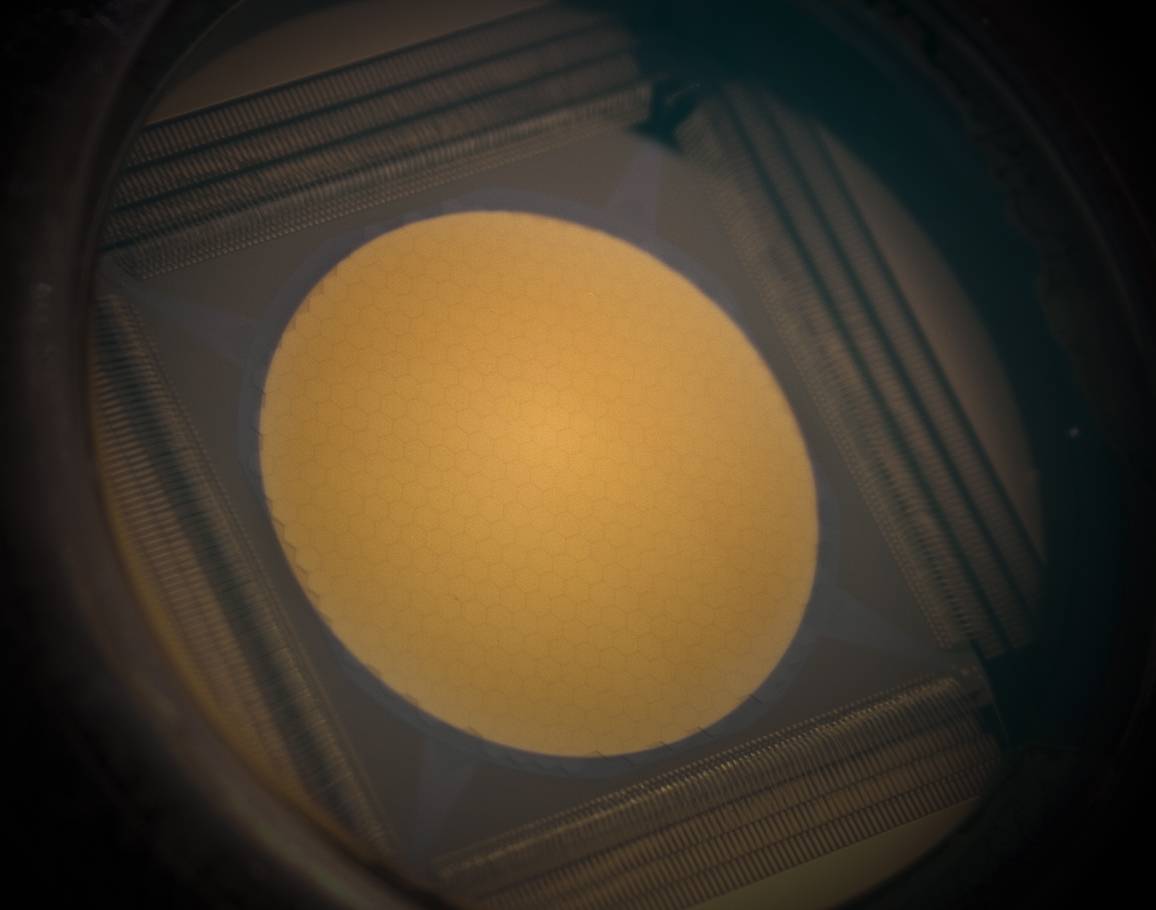
BMC Hex-TTP deformable mirror systems offer a practical alternative to standard continuous deformable mirrors. Hex-TTP deformable mirrors are well suited for many applications from in vivo microscopy to high-resolution astronomy to bleeding-edge laser communication applications. The unique Hex mirror architecture has the ability to tip, tilt, and piston multiple segments for alternative wavefront control.

End-to-End Product Support
From product education to customization to product installation, we work side by side with the world’s top researchers like you to help drive scientific discoveries. In fact, some of our customers have specifically included our deformable mirrors by name or listed us as co-authors in their published papers as our input contributed to the final publication. Find out more about our popular mirror models on our standard deformable mirror systems page. Finally, our deformable mirrors have been integrated into fully-commercialized instruments that are used in research facilities around the world. Click here for more information on OEM solutions.
Learn More >
Endless Scientific Discoveries
We are constantly improving our technology to meet your needs. If you need a deformable mirror that is larger, faster, or more capable in any way, we are open to developing a solution for you. If you are looking to integrate the MEMS Grating Modulator into an instrument or novel communication application, we can customize it for you. Whether it’s adaptive optics or optical modulation, our job is not done until your project is a success. Visit our applications pages shown in the main menu for more information.
Learn More >Where Are Deformable Mirrors Used?
-
Astronomy
Our deformable mirrors are fielded at prominent astronomical facilities around the world to help researchers improve wavefront correction capabilities, enabling cutting edge space telescope concepts.
-
Microscopy
Our robust deformable mirrors provide precise wavefront control and offer flexible mounting options, making our deformable mirrors ideal for microscopic use.
-
Laser Communication
Boston Micromachines Corporation has a legacy of supporting the nation's top defense contractors as well as commercial entities in a number of defense applications which optimize performance using deformable mirrors.
-
Laser Research
In contrast to liquid crystal spatial light modulators (LC SLMs), MEMS deformable mirrors have recently emerged as an alternative with significant advantages. MEMS DMs are more optically efficient and are more versatile as they can perform at multiple wavelengths.

"The BMC team’s flexibility and customer service have been nothing less than stellar and we truly appreciate you all. I look forward to continuing to work with you."
, Staff Engineer
Guidestar Optical Systems, Inc.
-
"I have been using Boston Micromachines hardware for years to image and analyze exoplanets. Their hardware is high performance, robust and reliable and they are always open to various types of customizations. BMC hardware will be my first choice for wavefront correction in future applications."
, Research Scientist
California Institute of Technology
-
"Boston Micromachines has been an important part of the adaptive optics community for two decades and it has been a pleasure working with them on many occasions over the years. We have frequently turned to them as suppliers of choice for our various applications in adaptive microscopy and have always found them to be supportive and responsive at every stage of the process. We currently have BMC hardware in various systems and look forward to continuing to work with them in the future."
, Professor of Engineering Science
Dynamic Optics and Photonics Group, University of Oxford
-
"We have been using spatial light modulators (segmented deformable mirrors) from BMC for nearly a decade, and have always been very pleased with our partnership with BMC, who has always provided excellent technical advice and customer support. We develop wavefront shaping techniques to image in strongly scattering media such as biological tissue, and speed and number of actuators are key parameters for our application. BMC’s products have been providing unmatched performance on all of these metrics with their segmented mirrors, and we have been able to break several records and achieve unprecedented imaging performance thanks to their Kilo-DM hardware."
, Directeur adjoint (Deputy Director)
Physics License department, Université Pierre et Marie Curie, Sorbonne University
-
"[The BMC] modulator is advantageous over the acousto-optic types because it is free from the dispersion effects and delivers better spatial resolution for the focused laser."
, Researcher
Department of Physics and Department of Energy Systems Research, Ajou University, Suwon 443-749, Korea
Son BH, Park JK, Hong JT, Park JY, Lee S, Ahn YH. Imaging ultrafast carrier transport in nanoscale field-effect transistors. ACS Nano. 2014;8(11):11361‐11368. doi:10.1021/nn5042619


You can’t afford to stay stuck. Curiosity and exploration are part of your DNA. We would love to partner with you to help move your discovery forward. If you have questions about our specific products or would like to learn more, contact us today.